Skip to content

Articles

Thoughts on security and building technology in practice


A Practical Stack for an Artist Website

Kiyomi Hawley Site

Most websites do not break all at once.

They slowly become harder to update, harder to trust, and eventually outdated.

The redesign of kiyomihawley.com started with a simple constraint:

Keep it easy to maintain, even months after launch.

Building The Cyber Incident

The Cyber Incident organizes and correlates meaningful cyber events involving named organizations into a structured operational view built from reporting, disclosures, attribution, and contextual signals.

It is not a news aggregator, ransomware tracker, SIEM, vulnerability feed, or comprehensive threat intelligence platform.

It is a focused incident intelligence surface built around structured, deduplicated events. Every event shown has a named victim organization. The unit of value is the event, not the article.

The Cyber Incident

The Cyber Incident started from a simple frustration.

There is no shortage of cybersecurity information. News feeds, advisories, research blogs, vendor reports. But most of it is fragmented, repetitive, and difficult to interpret when you just want to understand:

  • What actually happened
  • Who was affected
  • Whether it is confirmed
  • Who is behind it

Burnout Is Part of the Risk Model

Earlier this month, I experienced my first real-world cyber event as a security leader.

After more than two decades in technology and about eight months in cybersecurity leadership, I had spent a lot of time preparing for that moment. Studying, certifications, conferences, and graduate work. All of it aimed at being ready when it mattered.

And when it did, I was ready for the work.

What I was not fully prepared for was the cost of sustaining it.

Building a Homelab for Cybersecurity Graduate Research

Building a Compact Homelab

This project documents the ongoing build of a small-form-factor (SFF) homelab server housed in the beautiful Fractal Design Terra Jade case (with walnut front panel). The primary goals are a quiet, power-efficient, always-on system capable of:

  • KVM virtualization
  • Docker/Podman containers
  • Development work and graduate research
  • Network IDS/IPS using Suricata

Building a Homelab for Blockchain Development

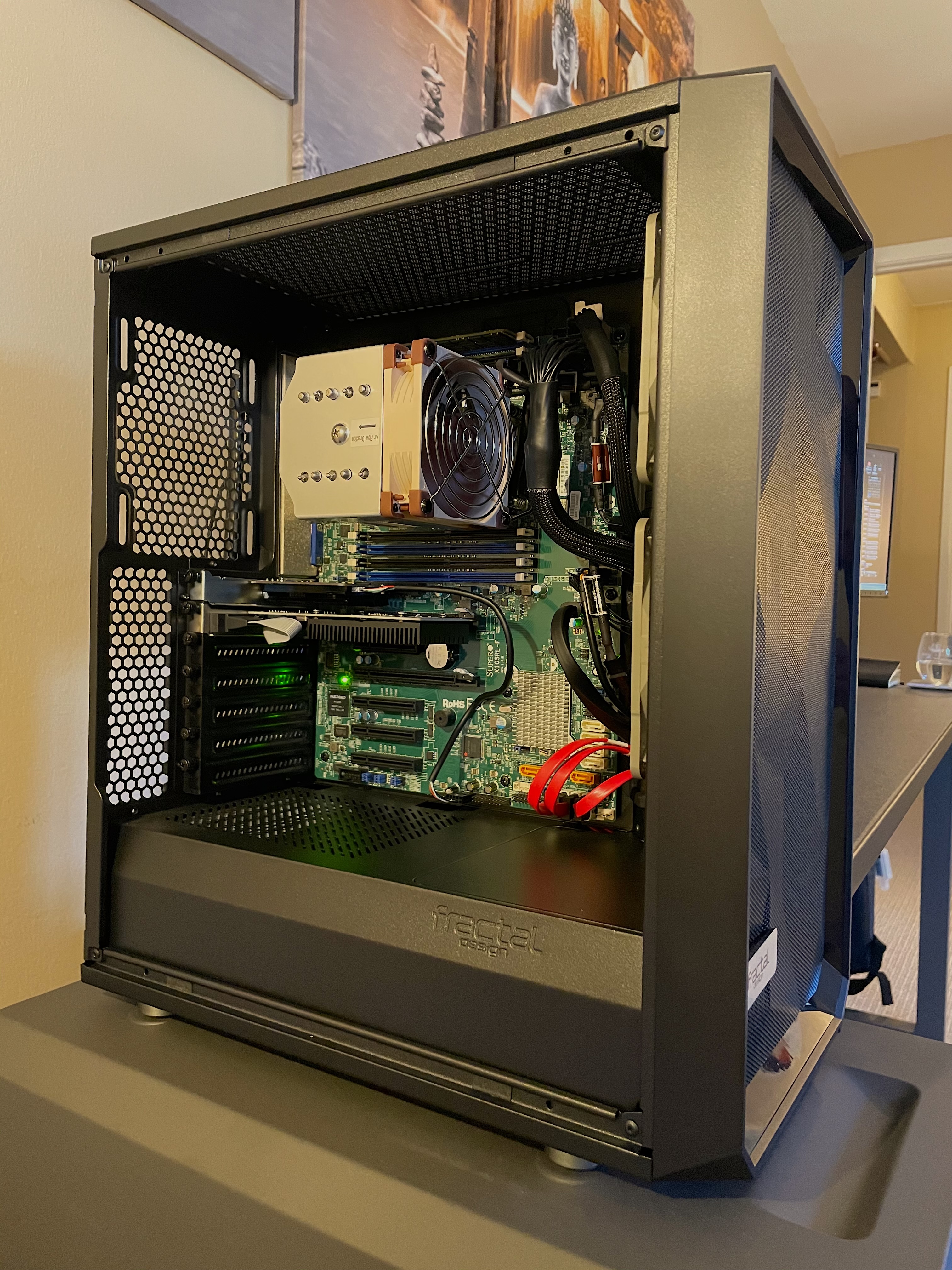
Hero Image: Completed Meshify C homelab running

In late 2021, I assembled this homelab in the Fractal Design Meshify C to dive deep into blockchain technology and NFTs. What started as curiosity quickly became hands-on mastery: launching my own Cardano stake pool, producing real blocks to secure the network, and minting my own NFTs on-chain using this architecture.

This project was a perfect mix of hardware tinkering, secure Linux setup, and distributed systems, which is exactly the kind of hands-on challenge I love.